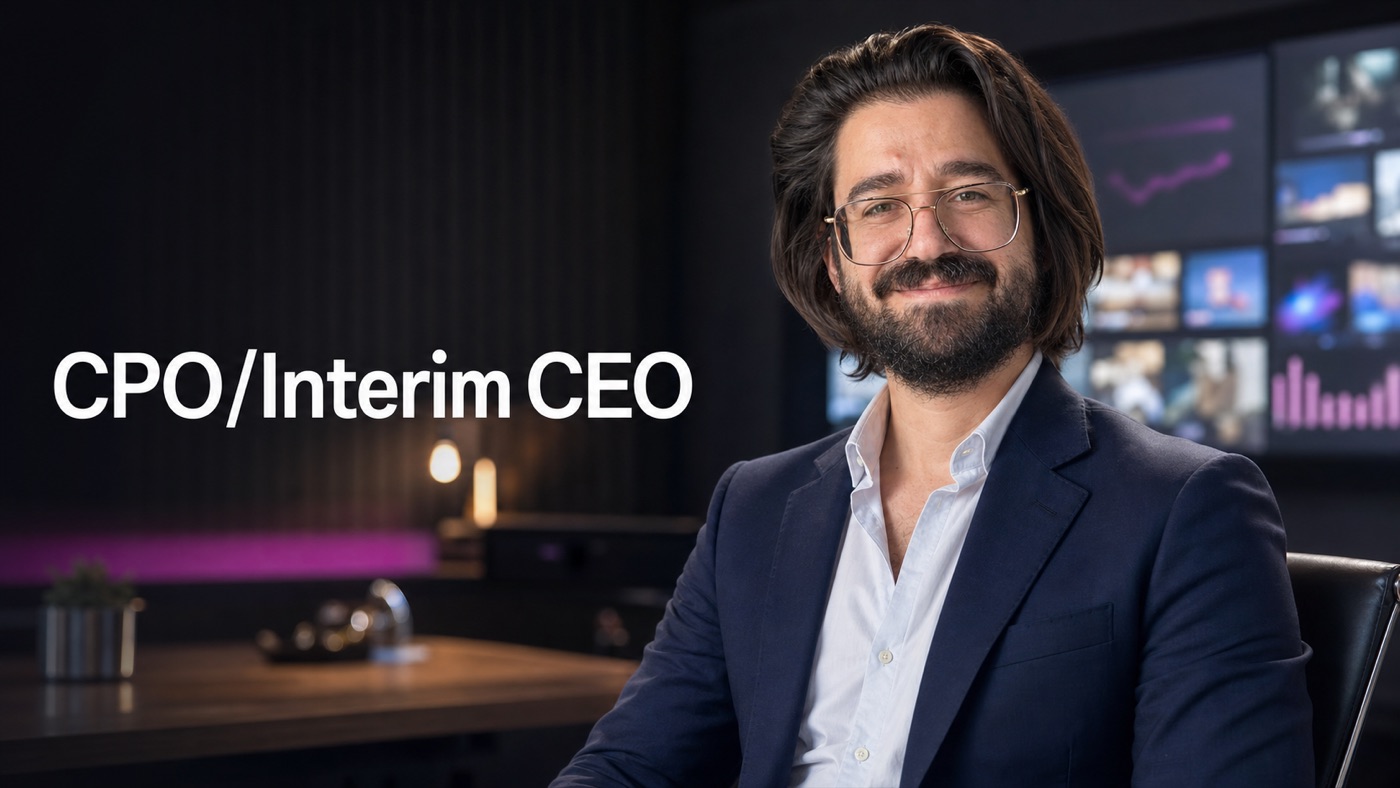
Chief Product Officer → Interim CEO, SuperBam, October 2024–April 2026
SuperBam is a Los Angeles-based intellectual property and video rights management company that helps content creators identify unauthorized uses of their work and recover the value those uses generate. When platforms support it, SuperBam can redirect advertising revenue from infringing videos to the rights holder. When they do not, the company helps pursue takedowns.
It is operationally intensive work, but the outcome is straightforward: protecting creators' content and livelihoods.
Situation
I joined SuperBam in October 2024 as Chief Product Officer with two primary mandates.
The first was to accelerate the development of new products and services. The second was to build a client-facing platform that would give content owners greater visibility into their claims, content, and revenue.
Delivering that required more than designing a dashboard. We needed to build an internal product and engineering function, improve the systems beneath the company's existing operations, and create a clearer path from the services business to scalable technology.
Several months into that work, SuperBam's CEO needed to take an unexpected leave. I was asked to step in as Interim CEO until he returned.
Decision
I accepted because the company needed continuity.
Although I was based in France, I was already leading significant parts of the organization through my role as CPO. I also had experience building companies, managing cross-functional teams, and operating through periods of uncertainty. Taking on the broader responsibility was a natural extension of the work I was already doing.
The circumstances made the assignment more complicated. We were entering a softer revenue period, monetization rates on YouTube had declined, and several important product and commercial initiatives were still in development.
The CEO was expected to return. That shaped how I approached the role.
My responsibility was to make the decisions the company needed while avoiding unnecessary, irreversible changes that would constrain the returning CEO. This was not an opportunity to impose a new vision or prove my value through disruption.
The goal was to reduce ambiguity, preserve momentum, and maintain confidence across the organization.
What Shipped
The first priority was communication.
Leadership uncertainty creates an information vacuum, and people rarely fill that vacuum with optimistic assumptions. I established a regular communication cadence so the company's 30-plus employees understood what we knew, what remained uncertain, what decisions had been made, and where we needed to focus.
I did not pretend to have answers that I did not have. But I made sure the team knew that someone was present, paying attention, and taking responsibility.
The second priority was focus.
Rather than expanding the company's agenda, I concentrated our resources on work that could protect existing revenue, create future revenue, or reduce unnecessary costs. We continued developing the underlying ingestion and data infrastructure required to support SuperBam's next generation of products, while advancing the client-facing experience that would eventually sit on top of it.
We also reviewed technology and operating expenses, eliminating unnecessary costs and creating meaningful recurring savings without reducing the company's ability to serve clients or continue priority product development.
The third priority was organizational continuity.
During my interim tenure, staffing remained stable. The team continued serving clients, the product roadmap moved forward, and key operating decisions did not stall because the CEO was unavailable.
Holding the line did not mean avoiding change. It meant distinguishing between changes the business genuinely needed and changes that existed primarily to demonstrate that a new person was in charge.
Result
When the CEO returned, he came back to an operating company rather than a leadership vacuum.
The team had remained intact throughout the leave. Costs had been reduced. Priority technology and product work had continued. Employees had received consistent information during a period that could easily have become destabilizing.
After his return, the company decided to discontinue the internal product function, and my contract ended.
That outcome did not change the responsibility I had accepted during the leave. Temporary leadership is not successful because it guarantees your own future role. It is successful when the organization remains capable of choosing its future once the permanent leader returns.
My job had been to preserve that capability.
What I'd Teach
Interim leadership is a specific discipline, and I believe most people misunderstand it.
The instinct when stepping into a leadership vacuum is often to transform the organization: reorganize the team, rewrite the strategy, launch major initiatives, or otherwise demonstrate visible authority.
That instinct can do more harm than good.
An interim leader has three primary jobs:
Reduce ambiguity. People can operate through difficult circumstances, but prolonged uncertainty without communication causes trust to deteriorate.
Preserve momentum. The organization cannot stop functioning while it waits for permanent leadership to return or emerge.
Protect optionality. Necessary decisions still need to be made, but avoid irreversible choices whose primary purpose is to establish your authority.
That requires judgment and restraint. You need to be visible without making the situation about yourself. You need to be candid about uncertainty without transferring your anxiety to the team. And you need to act decisively without treating temporary authority as a mandate for wholesale transformation.
You do not always get credit for holding the line.
But without someone holding it, there may be no line left to return to.
Bring this story to your audience
This case study informs how Jason talks about product strategy, media, and building under uncertainty on stage.
Explore speaking topics →